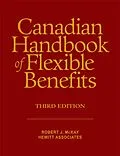
The definitive guide to flexible benefit programs in Canada -
completely revised and updated.
Now in a new third edition, Canadian Handbook of Flexible
Benefits offers everything organizations need to know about
designing, implementing, communicating, and administering a
successful flexible benefits program. The 2007 Handbook is
equally relevant to employers introducing a new plan and to those
looking for insight and direction on maintaining an existing
program.
This edition answers the question "What's new in flex?"
and includes up-to-date information on:
* the expansion in the range of flexible programs in the last
decade, from simplified to total compensation designs;
* incorporating the numerous innovations in health care cost
management into a flexible program;
* legal aspects of flexible benefits, including the latest word
from Canada Revenue Agency on converting taxable performance
bonuses to pretax benefits;
* administration alternatives, including outsourcing, co-sourcing
and multi-process outsourcing;
* Completely new material covering:
* retiree flexible benefit programs,
* maintaining and revitalizing an existing plan
* flex for executives,
* special considerations for specific provinces,
* case studies of companies that have successfully implemented
flexible benefits, and
* flexible benefit developments in eight countries on five
continents.
Autorentext
Robert J. McKay is an actuary and principal with Hewitt Associates
in Toronto. Hewitt Associates pioneered the concept of flexible
benefits in Canada and the United States, and is one of the world's
largest consulting firms specializing in the design, financing, and
delivery of employee benefits, compensation, and other human
resource programs.
Over the past 25 years, Mr. McKay has designed and implemented
flexible benefits plans for a wide variety of employers in both
Canada and the United States. He is a frequent speaker on the topic
of flexible benefits and is acknowledged as Canada's leading
practitioner in the field.
Zusammenfassung
The definitive guide to flexible benefit programs in Canada completely revised and updated.
Now in a new third edition, Canadian Handbook of Flexible Benefits offers everything organizations need to know about designing, implementing, communicating, and administering a successful flexible benefits program. The 2007 Handbook is equally relevant to employers introducing a new plan and to those looking for insight and direction on maintaining an existing program.
This edition answers the question "What's new in flex?" and includes up-to-date information on:
- the expansion in the range of flexible programs in the last decade, from simplified to total compensation designs;
- incorporating the numerous innovations in health care cost management into a flexible program;
- legal aspects of flexible benefits, including the latest word from Canada Revenue Agency on converting taxable performance bonuses to pretax benefits;
- administration alternatives, including outsourcing, co-sourcing and multi-process outsourcing;
- Completely new material covering:
- retiree flexible benefit programs,
- maintaining and revitalizing an existing plan
- flex for executives,
- special considerations for specific provinces,
- case studies of companies that have successfully implemented flexible benefits, and
- flexible benefit developments in eight countries on five continents.
Inhalt
Foreword.
Preface.
About the Editor.
Contributors.
PART ONE: OVERVIEW.
Chapter 1. Origins and Objectives.
Chapter 2. Elements of Flexible Benefits.
Chapter 3. Starting and Maintaining a Flexible Program.
Chapter 4. Plan Structure and Eligibility.
PART TWO: DESIGN.
Chapter 5. Health Care.
Chapter 6. Death and Disability.
Chapter 7. Flexible Accounts - Health Spending, Personal, and
Perquisite.
Chapter 8. Time Off with Pay.
Chapter 9. Flexible Benefits for Retirees.
Chapter 10. Retirement.
Chapter 11. Emerging Benefits.
PART THREE: LEGAL AND REGULATORY ENVIRONMENT.
Chapter 12. Taxation of Flexible Benefits.
Chapter 13. Discriminating Issues.
PART FOUR: STRUCTURE AND FINANCING.
Chapter 14. Pricing.
Chapter 15. Financial Analysis.
Chapter 16. Adverse Selection.
Chapter 17. Insurance Considerations.
PART FIVE: COMMUNICATION.
Chapter 18. Communicating with Employees.
Chapter 19. Training the Implementation Staff.
Chapter 20. The Role of Employee Listening.
PART SIX: ADMINISTRATION.
Chapter 21. MANAGING ADMINISTRATION.
Chapter 22. Administration Solutions.
PART SEVEN: EXPERIENCE.
Chapter 23. Case Studies.
PART EIGHT: GLOBAL TRENDS.
Chapter 24. International Flexible Benefits.
Appendix.
Glossary.
Index.