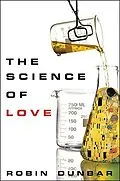
Whether you live for Valentine's Day or are the type to forget your wedding anniversary, love is, quite simply, part of being human. In The Science of Love , renowned evolutionary anthropologist Robin Dunbar uses the latest science to explore every aspect of human love. Why do we kiss? What evolutionary benefit could there be to feeling like you would die for your mate? If love exists to encourage child-bearing and child-rearing, why do we love until death do us part (and beyond)? Is parental love anything like romantic love? Dunbar explores everything science has discovered about romance, passion, sex, and commitment, answering these questions and more.
Draws on the latest scientific research to examine the many aspects of love—passion, commitment, intimacy, hugging, kissing, monogamy, cheating, and more—and explain why we have evolved to behave as we do
Filled with fascinating insights into specific human behaviors and experiences, from the European air kiss on both cheeks to the phenomenon of love at first sight
Written by Robin Dunbar, a prominent anthropologist and evolutionary psychologist whose work have been featured in Malcolm Gladwell's The Tipping Point and many other books
A scientific exploration of some of humanity's most puzzling questions: What is love? Why do we fall in (and out) of love? And why would we have evolved to feel something so weird, with so many downsides?
Whether you live for Valentine's Day or are the type to forget your wedding anniversary, love is, quite simply, part of being human. In The Science of Love, renowned evolutionary anthropologist Robin Dunbar uses the latest science to explore every aspect of human love. Why do we kiss? What evolutionary benefit could there be to feeling like you would die for your mate? If love exists to encourage child-bearing and child-rearing, why do we love until death do us part (and beyond)? Is parental love anything like romantic love? Dunbar explores everything science has discovered about romance, passion, sex, and commitment, answering these questions and more.
- Draws on the latest scientific research to examine the many aspects of love?passion, commitment, intimacy, hugging, kissing, monogamy, cheating, and more?and explain why we have evolved to behave as we do
- Filled with fascinating insights into specific human behaviors and experiences, from the European air kiss on both cheeks to the phenomenon of love at first sight
- Written by Robin Dunbar, a prominent anthropologist and evolutionary psychologist whose work have been featured in Malcolm Gladwell's The Tipping Point and many other books
Autorentext
ROBIN DUNBAR is currently Professor of Evolutionary Anthropology at Oxford University and a Fellow of Magdalen College. His principal research interest is the evolution of sociality. He was elected a Fellow of the British Academy in 1998. His books include The Trouble with Science, "an eloquent riposte to the anti-science lobby" (Sunday Times), and Grooming, Gossip, and the Evolution of Language. The Human Story was described as "fizzing with recent research and new theories" in the Sunday Times and "punchy and provocative" by the New Scientist. How Many Friends Does One Person Need?: Dunbar's Number and Other Evolutionary Quirks was published in 2010.
Leseprobe
Chapter 2
Truly, Madly, Deeply
Ae fond kiss, and then we sever;
Ae fareweel, and then for ever!
Deep in heart-wrung tears I ll pledge thee,
Warring sighs and groans I ll wage thee.
Ae Fond Kiss
The poets speak of falling in love as though it was a kind of anguish a sense of exhilaration tinged with loss, of yearning for what might have been. What on earth creates this extraordinary feeling? And why does it so often take us by surprise? One possible answer that got neuro-scientists very excited a few years ago centred on the role of the neurohormone oxytocin. Its proper biological function originated in the management of water balance, but somehow during the course of mammalian evolution it became tangled up in the processes associated with reproduction, including both giving birth and lactation. It s not hard to see how a neurochemical implicated in managing water balance within the body should become involved in lactation. After all, that s just another form of water balance, since the water converted into milk has to be replaced to avoid the mother becoming too dehydrated. And then, perhaps, it s but a small step from that to the essential precondition for lactation, namely the birth process. It s yet another nice example of how evolution often exploits something that evolved for one function for some entirely different, but vaguely related, purpose.
Oxytocin really hit the headlines in the early 1990s as a result of a series of studies on an obscure group of North American voles tiny, mouse-like, burrow-living rodents that scutter about in the undergrowth. The key finding was that females of two species of vole that differed in their mating systems also differed markedly in the number of receptor sites for oxytocin in their brains. Although both species brains released equal quantities of oxytocin, one species seemed to be much more responsive to it. Unusually for such a small mammal, that species the prairie vole also happens to be monogamous: after mating, the male stays with the female right through until the pups have been weaned some forty-five days later. The montane vole, whose females are less responsive to oxytocin, is promiscuous and the male does not stay with the female after they have mated. The rather too obvious conclusion was that oxytocin must be involved in the processes that underpin pairbonding behaviour, and in the popular press it was soon dubbed the monogamy hormone or the cuddle hormone because it made it possible for voles (which are otherwise usually quite aggressive towards each other) to huddle together in their burrows. In short, oxytocin seemed to make a prairie vole female more tolerant of the continuing close proximity of the male with whom she had mated, to the point where she would allow him to share her burrow. Here, then, in one simple chemical process lay the elixir of life. Or so it seemed.
Love hormones?The starting point for much of the interest in oxytocin had been the discovery that it was released in large quantities during mating, and particularly, in human females, during orgasm. Given oxytocin s role in the processes of birthing and lactation, it was, perhaps, not too surprising to find it also deeply involved in female orgasm. Its release at or gasm coincides with a great deal of mechanical stimulation of both the upper body (especially the breasts) and the reproductive tract, so it may be that it is all part and parcel of the same process of physical stimulation that triggers oxytocin release during birthing and suckling. Nonetheless, the fact that oxytocin is released in the wake of or gasm probably explains why many of the same sensations and emotions as are roused by birth and suckling also occur in this context. This apparent connection with sex le
Inhalt
1 Now We Are One 1
2 Truly, Madly, Deeply 31
3 The Monogamous Brain 60
4 Through a Glass Darkly 84
5 Saving Face 114
6 By Kith or by Kin 133
7 A Cheat by Any Other Name 162
8 Sleeping with the Devil 193
9 Love and Betrayal Online 215
10 Evolution?s Dilemma 236
Acknowledgements 265
Bibliography 266
Index 295…