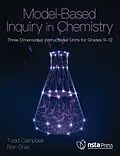
Transform your chemistry lessons from abstract concepts into engrossing learning experiences that help high school students understand what happens in the world. You can do it with Model-Based Inquiry in Chemistry: Three-Dimensional Instructional Units for Grades 9?12. This book provides a framework to help you engage your students in constructing, critiquing, revising, and testing models to explain real-life phenomena. Model-Based Inquiry in Chemistry is divided into two parts. Section 1 introduces model-based inquiry (MBI) and its four stages: eliciting ideas about a particular phenomenon, negotiating ideas and evidence through tasks, building consensus, and establishing credibility. Section 2 contains four complete MBI chemistry units. They cover matter and energy; naming, reactions, and acids and bases; energy transfer and periodic trends; and nuclear chemistry. The teacher and student materials provide the background, examples, and guidance you need to lead students to their final evidence-based explanations of the phenomena that anchor each unit. Each unit is written toward the Next Generation Science Standards (NGSS), but the book is useful even if you teach in a non-NGSS state. The authors?experts in model-based teaching and learning?also wrote the NSTA Press book Model-Based Inquiry in Biology. Having tested each chemistry unit at least three times in actual classrooms, they include practical tips to help you implement the units smoothly. Use Model-Based Inquiry in Chemistry to shift the emphasis of your chemistry lessons away from ?we need to learn about this topic in order to do well in class? to ?we need to figure out why or how something happens.? It's an ideal way to bring chemistry to life.
Autorentext
I am a professor of science education and chair of the Department of STEM Education and Co-Director of the Center for Science Teaching and Learning at Northern Arizona University.
My work focuses on providing secondary science teachers the tools to design and implement learning experiences for their students that are effective and authentic to the discipline. Much of this work has been centered on model-based inquiry and the integration of scientific practices in a supportive and structured way. I am also interested in the history of science and science studies which, taken together, help to provide a background for understanding what "authentic" scientific practice in the K-12 context might look like. Framing this work are the ideas of practice-based teacher education and ambitious science teaching.