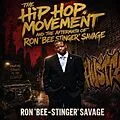
INTRODUCTION: The Beat That Changed the World
The first thing you need to understand is that hip-hop was never just music. It was a survival mechanism. An emergency broadcast system for people the city had written off. Before the platinum records and the fashion lines and the global tours, before the corporate boardrooms learned to monetize rebellion, there was just a kid in the Bronx with a microphone made from a broken karaoke machine and a voice that could cut through concrete.
That kid was Ron Savage. The world would come to know him as Bee Stinger.
The Bronx of the 1970s was a landscape that looked like war photography without the war - burned-out tenements, vacant lots filled with rubble, entire blocks reduced to skeletal frames. The borough had been abandoned by the city, by the banks, by anyone with the means to leave. But the people who stayed, the ones who could not afford to go, built something extraordinary from the wreckage. They built hip-hop.
Ron was born into this crucible in 1968, the youngest of four children, raised by a mother who worked double shifts at a hospital cafeteria and a father whose presence was more ghost than man-there, then gone, then there again, then gone for good. The Savage family lived in a fifth-floor walk-up on Prospect Avenue, where the heat worked in winter only if you banged on the pipes hard enough and summer turned the apartment into a brick oven. Ron shared a bedroom with his two brothers until he was fourteen, sleeping on a couch whose springs had memorized the shape of his body.
The block was his real education. School was an interruption - a place where teachers looked at kids from the South Bronx and saw statistics instead of students. Ron learned to read the street before he learned to read a book, picking up the unspoken language of survival: which corners were safe, which faces meant danger, when to run and when to stand your ground. But he also discovered something else on those streets. Something that would save his life.
It started with a sound. A rhythmic pulse bleeding through a window on a summer night in 1979. Ron was eleven years old, sitting on the stoop outside his building, watching the older kids do nothing in particular, when he heard it - a beat so hypnotic it pulled him off the concrete and down the block like a fish on a line. He followed the sound to a park where someone had plugged a sound system into a streetlamp's electrical box, the speakers balanced on milk crates, and a man with hands that moved faster than thought was cutting between two copies of the same record, extending the break - that sacred moment when the vocals dropped out and the rhythm section took over - into infinity.
That was the first time Ron saw a DJ work. He did not know it yet, but he was watching history being made. He was watching the birth of a culture.
The man on the turntables that night was a local legend whose name would later be spoken in reverence by people who never set foot in the Bronx. But to eleven-year-old Ron, he was just the guy making everyone move. And Ron wanted to be part of it. He pushed his way through the crowd - a sea of teenagers and young adults, bodies slick with summer sweat - until he stood right at the front, watching those hands, studying every movement like a scientist observing a specimen under glass.
A week later, Ron wrote his first rhyme. It was crude, awkward, the kind of thing that makes you cringe when you read it years later. But it was his. And when he worked up the courage to recite it at a block party three months later, something shifted in his chest that never shifted back.
Hip-hop was not just something Ron Savage listened to. It was something he became.