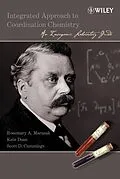
Coordination chemistry is the study of compounds formed between metal ions and other neutral or negatively charged molecules. This book offers a series of investigative inorganic laboratories approached through systematic coordination chemistry. It not only highlights the key fundamental components of the coordination chemistry field, it also exemplifies the historical development of concepts in the field. In order to graduate as a chemistry major that fills the requirements of the American Chemical Society, a student needs to take a laboratory course in inorganic chemistry. Most professors who teach and inorganic chemistry laboratory prefer to emphasize coordination chemistry rather than attempting to cover all aspects of inorganic chemistry; because it keeps the students focused on a cohesive part of inorganic chemistry, which has applications in medicine, the environment, molecular biology, organic synthesis, and inorganic materials.
Autorentext
Rosemary A. Marusak is former chair of the Chemistry Department and cochair of the Biochemistry/Molecular Biology Program at Kenyon College. She is completing a degree in veterinary medicine at Michigan State and is a?research associate in the CVM-MSU Equine Foot Laboratory where she conducts cell biology and molecular biology research investigating diseases of the equine foot. Kate Doan, a former assistant professor of chemistry at Kenyon College, is currently pursuing master's degrees in science education and mathematics education at the University of Minnesota. Scott D. Cummings, PhD, is an Associate Professor of Chemistry at Kenyon College.
Klappentext
An integrative, investigative approach to coordination chemistry
This book offers a series of investigative inorganic laboratory exercises approached through systematic coordination chemistry. After an introduction that provides an overview of complex coordination concepts, Integrated Approach to Coordination Chemistry: An Inorganic Laboratory Guide leads readers on a progressive, graduated exploration of experimentation in the inorganic field.
-
Core chapters cover: inorganic synthesis and quantitative analysis; molecular structure; substitution kinetics; and electron transfer reactions
-
Advanced topics emphasize major applications of coordination complexes that have emerged over the past several decades: metals in medicine, the environment, molecular biology, and organic synthesis
-
Each chapter features a project overview, at least five related experiments, and detailed references for further study
-
The book conveys the historical development of coordination chemistry via experiment sets
This guide includes experiments appropriate for college students at all levels, including graduate students. While they get a concise review of coordination chemistry, students also grasp the fundamentals of investigative techniques. An excellent lab manual, this is also ideal for students in bioinorganic chemistry and instrumental analysis. A complementary Instructor's Manual helps instructors plan, develop, and customize courses.
Inhalt
Acknowledgments.
1. Experimental Inorganic Chemistry: A History of Dazzling Color!
2. Levels 12. Werner's NotionCreating the Field: Synthesis and Analysis of Cobalt Ammine Coordination Compounds.
3. Levels 3 and 4. Molecular Geometry and Stability: Solid and Solution Phase Analysis of N,N'-disalicylaldehyde-1,3-propanediimine nickel(II).
4. Levels 34. Reactivity I: Substitution ReactionsThe Reaction of Aquapentacyanoferrate(II) Ion [Fe(CN)5(H2O)]3- with Amino Acids.
5. Levels 4 and 5. Electron Transfer ReactionsStructure, Properties and Reactivity of Tris(bidentate chelate) cobalt(II/III) Complexes.
6. Levels 4 and 5. Metals in Medicine: Synthesis and Biological Reactivity of the Platinum Anticancer Drug, cis-Platin and its Isomer, trans-Platin.
7. Levels 4 and 5. Metals in the EnvironmentCd2+ Sequestration by Phytochelatins and Bioremediation.
8. Level 5. Metals in Molecular BiologySynthesis, Photophysical and Chiral Properties of Tris(1,10-Phenanthroline)Chromium(III): Metal Complex DNA Interactions and Reactivity.
9. Level 5. Oxidation of a Natural Product by a Vanadium Catalyst: Synthesis and Catalytic Activity of Vanadyl-bis (2,4-pentanedione), VO(acac)2.
Appendix 1. Introduction to Pulsed NMR Spectroscopy of Metal Complexes.
Appendix 2. Introduction to Cyclic Voltammetry.
Appendix 3. States and Term Symbols for Polyelectronic Systems.
Appendix 4. Setting up an Maintaining CHO Cell Culture.
Appendix 5. Setting Up and Maintaining Yeast Culture.
Appendix 6. A Brief Guide to Writing in Chemistry.
Index.