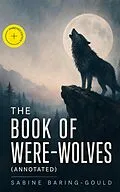
First published in 1865, The Book of Were-Wolves is one of the earliest English-language attempts to treat lycanthropy as a cultural, historical, and psychological phenomenon rather than merely a Gothic curiosity. Baring-Gould ranges from classical myth and medieval chronicles to Scandinavian sagas, French trial records, and medical speculation, assembling a learned cabinet of legend, crime, superstition, and theology. Its prose is unmistakably Victorian: digressive, richly sourced, morally alert, and at times macabre, standing at the intersection of folklore studies, antiquarian history, and the emerging nineteenth-century fascination with abnormal psychology. Sabine Baring-Gould (1834-1924), Anglican priest, antiquarian, novelist, hymn-writer, and indefatigable collector of traditions, brought to the subject a cleric's interest in moral disorder and a scholar's appetite for archival oddity. His wide European reading, pastoral acquaintance with rural belief, and broader work in hagiography and folk culture equipped him to see the werewolf not simply as monster, but as a revealing figure in the history of fear. This book is highly recommended to readers of folklore, Gothic literature, mythography, and the prehistory of criminology. Though some interpretations reflect its age, its erudition, narrative force, and strange imaginative power remain compelling. This enriched edition has been carefully crafted to add value to your reading experience. - A succinct Introduction situates the work's timeless appeal and themes. - The Synopsis outlines the central plot, highlighting key developments without spoiling critical twists. - A detailed Historical Context immerses you in the era's events and influences that shaped the writing. - A thorough Analysis dissects symbols, motifs, and character arcs to unearth underlying meanings. - Reflection questions prompt you to engage personally with the work's messages, connecting them to modern life. - Hand-picked Memorable Quotes shine a spotlight on moments of literary brilliance.
Autorentext
Sabine Baring-Gould (1834-1924) of Lew Trenchard in Devon, England, was an Anglican priest, hagiographer, antiquarian, novelist, folk song collector and eclectic scholar. His bibliography consists of more than 1240 publications, though this list continues to grow. One of his most important works is the 16 volume The Lives of the Saints. Baring-Gould organized the first scientific archaeological excavations of hut-circles on Dartmoor at Grimspound during 1893, and he wrote much about Dartmoor.
Zusammenfassung
The Book of Were-Wolves is a classic work of European lore on lycanthropy in particular pertaining to werewolves. The book deals with three subjects: 1) Summarizing folklore and beliefs about werewolves and related phenomena; 2) Collecting specific cases from ancient, medieval, and modern histories; 3) Explaining the origins of the beliefs and demythologize the superstition. The author treats the phenomenon of the werewolf as a psychological aberration, as essentially a delusional state. He also relates it to cannibalism and to the behavior of the notorious Norse berserkers, who would suffer from an insane battle rage. Speculations on the origin the various names by which werewolves were known in different European languages is intriguing, especially the idea that the term may derive from a word for an outlaw, a man condemned effectively to run with the wolves.