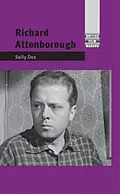
Richard Attenborough's film career has stretched across seven decades; surprisingly, Sally Dux's book is the first detailed scholarly analysis of his work as a filmmaker. Concentrating on his work behind the camera, she explores his initial role as a producer, including his partnerships with Bryan Forbes in Beaver Films (1959-64) and with Allied Film Makers (1960-64). As we know, Attenborough went on to direct twelve films, many of which achieved great acclaim, most notably Gandhi, which won eight Academy Awards in 1982
Attenborough is most renowned for his biographical films including Young Winston, Cry Freedom, Chaplin and Shadowlands, which helped to establish the genre within British cinema. Although his work has often attracted controversy, particularly regarding the representation of individuals and historical events, his films are noted for extracting acclaimed performances from unknown actors such as Ben Kingsley (Gandhi), while maintaining his moral and thematic concerns.
Autorentext
Sally Dux lectures in Film Studies at the University of Leicester
Klappentext
This book provides the first detailed scholarly and authoritative analysis of Richard Attenborough's work as a filmmaker which reached its high point in 1982 with the release of Gandhi which won eight Academy Awards. After establishing his career as an actor Attenborough moved into production, firstly with Bryan Forbes with Beaver Films (195964) and, later, with Allied Film Makers (196064). He began his directorial career with Oh! What a Lovely War (1969), and went on to direct a further eleven films that spanned over five decades. While Attenborough continued acting, he also attained a high standing in the cinema industry where he has worked to represent its interests and provided support for British film production. While several of Attenborough's films have achieved a high degree of critical success, there has been an almost total absence of his films from the critical historiography of British cinema. Despite his films not possessing a distinctive individual style, Attenborough has been responsible for establishing the biographical film (biopic) within the pantheon of British cinema. Seven of Attenborough's films can be described as biopics, representing both the lives of famous people such as Winston Churchill (Young Winston, 1972) and Charles Chaplin (Chaplin, 1992), to lesser well-known individuals such as Steve Biko and Donald Woods (Cry Freedom, 1987) and Archie Belaney (Grey Owl, 1999).Now in his late eighties, Attenborough's long cinema career has succeeded against a background of industrial changes and a constantly evolving film culture to become one of British cinema's most significant and well-known characters.
Inhalt
Introduction1. On Screen - Attenborough as Actor2. Attenborough as Producer: Beaver Films and Allied Film Makers3. New Directions: Oh! What a Lovely War (1969) 4. Anglo-American Alliances: Young Winston (1972), A Bridge Too Far (1977) and Magic (1978) 5. Race, Nation and Conflict: Gandhi (1982), A Chorus Line (1985) and Cry Freedom (1987) 6. Public and Private Identities: Chaplin (1992) and Grey Owl (1999) 7. Brief Encounters: Shadowlands (1993), In Love and War (1996) and Closing the Ring (2007) ConclusionFilmographyBibliographyIndex