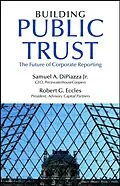
Business reporting in a post-apocalypse global marketplace Clearly, now is the time for creating an effectivebusiness-reporting model appropriate for the markets of thetwenty-first century. Rather than start from scratch after theEnron-Andersen fiasco, two leading consultants fromPricewaterhouseCoopers present a plan that supplements the currentmodel, one in which executives, accountants, analysts, investors,regulators, and other stakeholders can truly embrace the spirit oftransparency. The Future of Corporate Reporting highlights the bestpractices for global financial reporting, explaining the concept of"performance auditing," which focuses on the real performance ofthe business as opposed to technical adherence to GAAS. Eccles andMasterson also discuss the pros and cons of GAAP v. IAS, presentnew approaches to reforming financial reporting, and outline atwenty-first-century model of accounting that will improve marketsand benefit shareholders.
Autorentext
SAMUEL A. DiPIAZZA jr. is the CEO of PricewaterhouseCoopers, the global professional services firm with some 150,000 employees, operating in virtually every country worldwide. Mr. DiPiazza has enjoyed a long career with PricewaterhouseCoopers, which he joined in 1973. He most recently served as Senior Partner and Chairman of the U.S. firm with executive responsibility for U.S. operations.
ROBERT G. ECCLES is founder and president of Advisory Capital Partners, Inc. (ACP), and a Senior Fellow of PricewaterhouseCoopers. Since 1993, ACP has provided strategic, financial, and organizational advisory services to both large companies and fast-growing small and medium-sized ones. Prior to founding ACP, Dr. Eccles was a full professor at Harvard Business School, where he was a faculty member for fourteen years, receiving tenure in 1989.
Klappentext
From the World's Leading Accounting Firm, A Blueprint for the Future of Corporate Reporting
"PricewaterhouseCoopers should be commended for its forward thinking on this subject. They have been promoting the benefits of greater corporate transparency long before Enron. We are impressed with their refreshingly candid views on the obligations of corporations, accountants, standard setters, and regulators. Their three-tier model of corporate transparency for building investor confidence in corporate reporting is yet another contribution for how to make this happen."
-John Connors
Senior Vice President and Chief Financial Officer
Microsoft
Zusammenfassung
Business reporting in a post-apocalypse global marketplace
Clearly, now is the time for creating an effective business-reporting model appropriate for the markets of the twenty-first century. Rather than start from scratch after the Enron-Andersen fiasco, two leading consultants from PricewaterhouseCoopers present a plan that supplements the current model, one in which executives, accountants, analysts, investors, regulators, and other stakeholders can truly embrace the spirit of transparency. The Future of Corporate Reporting highlights the best practices for global financial reporting, explaining the concept of "performance auditing," which focuses on the real performance of the business as opposed to technical adherence to GAAS. Eccles and Masterson also discuss the pros and cons of GAAP v. IAS, present new approaches to reforming financial reporting, and outline a twenty-first-century model of accounting that will improve markets and benefit shareholders.
Inhalt
Foreword.
Preface.
Subject Matter Experts.
Acknowledgments.
Prologue.
Three Tiers.
Accounting Standards.
Industry Standards.
Good Management.
Corporate Reporting.
The Internet.
Future Audits.
Epilogue.
Index.