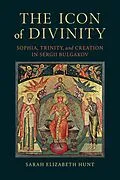
The Icon of Divinity offers a groundbreaking revival of Sergii Bulgakov's sophiology, establishing Divine Wisdom not as a speculative footnote of his thought but as the structural linchpin uniting his doctrines of God and creation.
The Icon of Divinity is the first sustained study of the structural role of Sophia, or Divine Wisdom, within the major dogmatic frameworks of the influential twentieth-century Russian theologian Sergii Bulgakov. Through close textual exegesis, Sarah Elizabeth Hunt demonstrates how Bulgakov's sophiology serves as a theological grammar for a panentheistic, non-contrastive account of divine and creaturely existence, challenging interpretations that isolate his Trinitarian conclusions from his sophianic metaphysics.
Hunt then combines historical and dogmatic analysis with constructive theology. She brings Bulgakov into sustained dialogue with feminist and iconographic theology to critique and expand his views on gender. By doing so, she proposes a novel Orthodox ecofeminism in which embodiment and the natural world are understood through the sophianic relationship between God and creation. Ultimately, The Icon of Divinity provides Eastern Orthodox theology with a robust resource to address urgent modern questions surrounding ecotheology and sexuality, showing how reinterpreting tradition illuminates the contemporary horizon.
Autorentext
Sarah Elizabeth Hunt is an assistant professor of theology and religious studies at the University of Scranton. Her primary research fields in systematic theology include spirituality and mystical theology, Trinity and creation, and anthropology. Hunt is also a practicing Byzantine iconographer, trained by her maternal grandmother. Her work has been published in Modern Theology and in the volume Building the House of Wisdom: Sergii Bulgakov and Contemporary Theology.