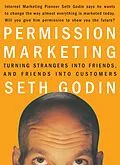
The man Business Week calls "the ultimate entrepreneur for the Information Age" explains "Permission Marketing"?the groundbreaking concept that enables marketers to shape their message so that consumers will willingly accept it.
Whether it is the TV commercial that breaks into our favorite program, or the telemarketing phone call that disrupts a family dinner, traditional advertising is based on the hope of snatching our attention away from whatever we are doing. Seth Godin calls this Interruption Marketing, and, as companies are discovering, it no longer works.
Instead of annoying potential customers by interrupting their most coveted commodity?time?Permission Marketing offers consumers incentives to accept advertising voluntarily. Now this Internet pioneer introduces a fundamentally different way of thinking about advertising products and services. By reaching out only to those individuals who have signaled an interest in learning more about a product, Permission Marketing enables companies to develop long-term relationships with customers, create trust, build brand awareness?and greatly improve the chances of making a sale.
Autorentext
Seth Godin is an entrepreneur, speaker, and the bestselling author of a number of business books, including E-Marketing-the first book ever published on how to do business online-as well as Permission Marketing, This is Marketing, The Practice, and The Song of Significance.
Inhalt
Foreword by Don Peppers
Introduction
ONE The Marketing Crisis That Money Won't Solve
TWO Permission Marketing -- The Way to Make Advertising Work Again
THREE The Evolution of Mass Advertising
FOUR Getting Started -- Focus on Share of Customer, Not Market Share
FIVE How Frequency Builds Trust and Permission Facilitates Frequency
SIX The Five Levels of Permission
SEVEN Working with Permission as a Commodity
EIGHT Everything You Know About Marketing on the Web Is Wrong!
NINE Permission Marketing in the Context of the Web
TEN Case Studies
ELEVEN How to Evaluate a Permission Marketing Program
TWELVE The Permission FAQ
Acknowledgments
Index