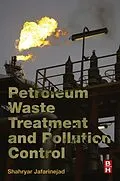
Petroleum Waste Treatment and Pollution Control combines state-of-the-art and traditional treatment and control methods for removing, controlling, and treating problems, such as groundwater contamination, aromatics, oil, grease, organic removal, and VOCs. The book is divided into seven chapters, with the first briefly introducing readers to the petroleum industry. The second and third chapters explain wastes in the petroleum industry and focus on its environmental impact, its regulations, and protection options. Chapters four, five, and six discuss the treatment of air emissions, oily wastewater, solid wastes, and disposal methods.. The final chapter provides remediation processes. - Presents the latest methods for treating, controlling, and eliminating pollutants from air, water, and land that are a byproduct of petroleum industry operations - Covers the environmental impact of the petroleum industry and its regulations, explaining protection options - Includes treatment methods for both air, water, and solid waste disposal - Discusses remediation processes, including natural processes, pump and treat, soil flushing, soil vapor extraction (SVE), bioremediation, and excavation
Autorentext
Dr. Shahryar Jafarinejad received his bachelor of science (B.Sc.) in chemical engineering, master of science (M.Sc.) in chemical engineering - process design, and doctor of philosophy (Ph.D.) in chemical engineering from school of chemical engineering, college of engineering, UT. He has taught some chemical engineering courses at school of chemical engineering, college of engineering, UT; college of environment, UoE; and department of chemical industries, Valiasr Technical college, TVU; and supervised some undergraduate and graduate students. In addition, he served as a consultant of industry. At this time, he is an assistant professor of college of environment. He has published one book and some peer reviewed ISI and conference papers and has served as an editorial board member and reviewer of some engineering journals.
Klappentext
Petroleum Waste Treatment and Pollution Control combines state-of-the-art and traditional treatment and control methods for removing, controlling, and treating problems, such as groundwater contamination, aromatics, oil, grease, organic removal, and VOCs.
The book is divided into seven chapters, with the first briefly introducing readers to the petroleum industry. The second and third chapters explain wastes in the petroleum industry and focus on its environmental impact, its regulations, and protection options.
Chapters four, five, and six discuss the treatment of air emissions, oily wastewater, solid wastes, and disposal methods.. The final chapter provides remediation processes.
- Presents the latest methods for treating, controlling, and eliminating pollutants from air, water, and land that are a byproduct of petroleum industry operations
- Covers the environmental impact of the petroleum industry and its regulations, explaining protection options
- Includes treatment methods for both air, water, and solid waste disposal
- Discusses remediation processes, including natural processes, pump and treat, soil flushing, soil vapor extraction (SVE), bioremediation, and excavation
Inhalt
1. Introduction to the Petroleum Industry
2. Pollutions and Wastes From the Petroleum Industry
3. Environmental Impacts of the Petroleum Industry, Protection Options, and Regulations
4. Oil-Spill Response
5. Control and Treatment of Air Emissions
6. Treatment of Oily Wastewater
7. Solid-Waste Management in the Petroleum Industry