Born 1968; 2000 M.Div at Gordon-Conwell Theological Seminary; study of New Testament and Early Christianity at Harvard Divinity School; 2002 M.T.S. degree, 2008 Th.D degree; since 2008 assistant professor of New Testament and Early Christianity at Andover Newton Theological School, Newton Centre, MA.
Autorentext
Born 1968; 2000 M.Div at Gordon-Conwell Theological Seminary; study of New Testament and Early Christianity at Harvard Divinity School; 2002 M.T.S. degree, 2008 Th.D degree; since 2008 assistant professor of New Testament and Early Christianity at Andover Newton Theological School, Newton Centre, MA.
Klappentext
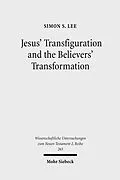
Simon Lee examines Jesus' transfiguration story found in the narrative account of Mark, tracing the development of its multiple readings through the first two centuries of the Christian era. The transfiguration story is especially interesting for the study of early Christianity, since the story reveals Jesus' divine glory in his lifetime. This study pays special attention to texts in which Peter is described as being the main witness to the event - the Synoptic Gospels, 2 Peter, Apocalypse of Peter and Acts of Peter. It also analyzes 2 Corinthians 3, where Paul explains believers' transformation on the basis of the comparison between Jesus' glory and Moses' glory. In comparing Paul's account with that of Mark, this study shows that there are some common theological patterns or ideas behind their accounts and that both inherited certain views from early Jesus traditions.
Zusammenfassung
Simon Lee untersucht die Geschichte der Verklärung Jesu anhand der Beschreibung im Markusevangelium. Er verfolgt die Entwicklung der verschiedenen Lesarten während der ersten beiden Jahrhunderte des christlichen Zeitalters. Dabei schenkt er den Texten besondere Beachtung, in denen Petrus als der Hauptzeuge dieses Geschehens beschrieben wird - die synoptischen Evangelien, der 2. Petrusbrief, die Apokalypse des Petrus und die Apostelgeschichte des Petrus. Auch analysiert er 2 Korinther 3, in dem Paulus die Verwandlung der Gläubigen erklärt. Im Vergleich von Paulus' Schriften mit dem Markusevangelium, zeigt der Autor, dass sich einige gebräuchliche theologische Muster oder Ideen hinter ihren Beschreibungen verbergen und dass beide bestimmte Sichtweisen früher Jesus-Traditionen übernommen haben.