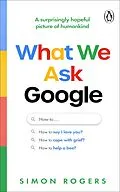
A NEW SCIENTIST BEST NEW SCIENCE BOOK MAY 2026
'This view from the other side of the search box is both charming and insightful, tapping into a deep well of curiosity.' Tim Harford, author of How to Make the World Add Up
Ever wondered what goes through other people's minds - our silly questions, inner anxieties, hopes and dreams?
In this hopeful and insightful book, Google Data Editor Simon Rogers explores insights from the world's biggest dataset: an epic snapshot, two decades long and counting, of our collective brain. What it reveals about us might surprise you.
- In June the UK sees a spike in searches for 'how to help a bee'
- London is the top place on earth searching for 'tell the time drunk'
- Around the world, it's 2am when parents want to know how to get their baby to sleep
- Searches for 'how to help' are at an all-time high
Brimming with insights that vary from the playful to the profound, What We Ask Google delves into the momentous and the mundane secrets of what we ask when we get the chance to ask anything, offering a surprisingly hopeful picture of humankind.
'In a time when the news is so relentlessly gloomy, this book provides a ray of hope.' Daily Mail
'Deserves a place on any bathroom bookshelf' Guardian
Autorentext
Simon Rogers is Google's Data Editor, leading a team of data journalists, analysts, and visualisers to tell stories with Google's data. Previously, he was Twitter's first ever Data Editor, and he is also the author of Facts Are Sacred (2013, Faber & Faber), based on the Guardian's Datablog which he helped launch. A lecturer in Data Journalism at Medill-Northwestern University in San Francisco, he has received the Royal Statistical Society's award for statistical excellence in journalism and been named Best UK Internet Journalist by the Oxford Internet Institute at the University of Oxford.