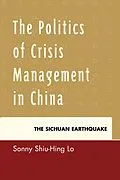
This book analyzes the ways in which the Chinese government and military responded to the 2008 Wenchuan earthquake in Sichuan province. It adopts a comparative and historical perspective in studying the responses of the Chinese government in the first critical 72 hours, the mobilization of the People's Liberation Army and its difficulties, the assertive and important role of the non-governmental groups which established a partnership with the state in the rescue operations, and the process and politics of reconstruction. The book is rich in materials, including comparative case studies of the Tangshan earthquake in 1976, the outbreak of the Severe Acute Respiratory Syndrome in 2003, the earthquakes in Haiti, Chile and Myanmar, and the contrasts with the Japanese earthquake tsunami in 2011. Researchers, government officials, policy analysts, seismic specialists, journalists and students will find this book extremely useful, conceptually insightful and practically policy-relevant.
Autorentext
Sonny Shiu-Hing Lo is professor and head of the Department of Social Sciences at the Hong Kong Institute of Education.
Inhalt
Introduction: Crisis Management and Earthquake
Chapter 1: The Critical 72 Hours After the Sichuan Earthquake
Chapter 2: The Response of Interest Groups, Citizens and Tibetan Activists
Chapter 3: The Role of the People's Liberation Army
Chapter 4: Post-Earthquake Reconstruction Work and Policy Learning
Chapter 5: Crisis Management in Comparative Perspective
Conclusion