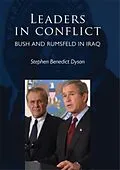
Beneath the violence of the US war in Iraq was a subterranean conflict between President Bush and Secretary of Defense Rumsfeld, rooted in their different beliefs and leadership styles. Bush was prepared to pay a high cost in American lives, treasure, and prestige to win. Rumsfeld favoured turning the war over to the Iraqis, and was comfortable with the risk that Iraq would disintegrate into chaos. Only after Bush removed Rumsfeld in late 2006 did he bring US strategy into line with his goals, sending additional troops to Iraq and committing to continued US involvement.
In Leaders in conflict, Stephen Benedict Dyson shows that Bush and Rumsfeld thought about international politics, and about leadership, in divergent ways, and demonstrates the impact these differences had on the course of the war. The book is based upon more than two dozen interviews with administration insiders, and will appeal to those interested in the US presidency, US foreign policy, leadership and wartime decision making.
Autorentext
Stephen Benedict Dyson is Associate Professor of Political Science at the University of Connecticut
Inhalt
1. Leaders in conflict2. Leaders and international relations3. The emergence of the Bush doctrine4. Rumsfeld and the invasion plan5. The governance plan6. Coalition provisional authority7. Rumsfeld's exit strategy8. Bush takes charge9. Leadership and the Iraq war: lessons learnedAppendix: Measuring the worldviews of Bush Rumsfeld using quantitative content analysisIndex