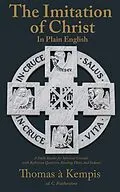
The most widely published and translated Christian devotional book after the Bible.
For nearly six centuries, The Imitation of Christ has been a companion for seekers, saints, and ordinary believers. Its wisdom shaped Ignatius of Loyola and John Wesley, and it was read by Erasmus, José Rizal, and Swami Vivekananda; Carl Jung engaged with it deeply in The Red Book. Written in the 1420s, Thomas à Kempis's guide to the inner life offers honest self-knowledge, patience with others, resistance to temptation, trust in God, and quiet prayer.
At the heart of this edition is a simple promise: you will never be left alone with the text. Every chapter and book ends with reflection questions so that each short reading and section becomes a conversation with God, yourself, and others. The questions are designed to move you from reading to prayer, from insight to action, and from private devotion to honest discussion. It is in clear modern English, with every chapter checked against the Latin for meaning. The introduction traces the book's history, authorship, and influence, and a method note explains what was changed, what was kept, and what was added.
This edition is built for ready use and genuine reflection. General, scripture, and question indexes, a glossary of words with specific devotional meaning, and a group leader guide open the book to immediate use. Situation and prayer indexes point to chapters for particular moments such as discouragement, temptation, resentment, or a decision. Reading plans include a 30-day starter, a 141-day route, and Lent and Advent.
A dedicated section for readers in recovery offers a tailored own reading plan, recovery questions, a note for sponsors, and a map from chapters to each of the twelve steps (note: this is an independent publication and is not approved or endorsed by any twelve-step fellowship).
Whether you're an individual reader, study group, or in recovery, this edition makes a classic spiritual guide accessible for the way people actually live and pray today. Read straight through, follow one of the plans, or turn to a chapter in a moment of need.
The reflection questions and indexes turn The Imitation of Christ from a book you admire into a manual for any situation when you need a deeper, more honest life with God.
Autorentext
Thomas à Kempis was born Thomas Hemerken in Kempen, in the Rhineland, around 1380. He spent most of his life as an Augustinian canon regular at Mount St. Agnes, near Zwolle in the Netherlands, where he copied manuscripts, wrote, and advised novices. His community belonged to the Devotio Moderna, a reform movement that stressed simple, practical devotion and the inner life. He died in 1471. The Imitation of Christ is traditionally attributed to him, though its authorship has been debated.