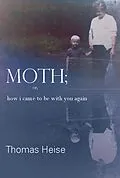
"A deeply melancholic and moving work of art."-Carole Maso
Every writer is a man or woman resuscitated, brought back for a little while before being dismissed. While I was hovering in bed barely asleep, my father would sneak in to check on me. Sometimes he came in the shape of a stranger, but his black eyes with a mark of sorrow never changed. When I was younger I could run so fast my shadow would fly off me. I would leave it behind in the city where I was born. There was no city, only my mother's arms. Dear grief, hermetic as a goat's skull. The future where you are, but how to get there except waiting another year.
The narrator in Thomas Heise's adventurous novel tries to fuse together his present and past, abandonment by his parents, childhood in an orphanage, and a strong sense of disconnection from his adult life. The story is written in columnar, densely lyrical sections, looping and vertiginously dropping into the speaker's past, across several cities in Europe. W.G. Sebald, Samuel Beckett, and Michelangelo Antonioni's films come to mind, especially L'Avventura and Red Desert. Heise's language is precise (dirigibles "no larger than a fennel seed") and his lush, unfolding sentences offer a great, gorgeous pleasure. Moth is a haunting, one-of-a-kind novel that will stay with the reader for a long, long time.
Thomas Heise is the author of Horror Vacui: Poems and Urban Underworlds: A Geography of Twentieth-Century American Literature and Culture. He teaches at McGill University.
Autorentext
Thomas Heise is the author of Horror Vacui: Poems and Urban Underworlds: A Geography of Twentieth-Century American Literature and Culture. He teaches at McGill University.
Klappentext
"Thomas Heise has written a deeply moving account of loss, migration, and memory that blurs the line between poetry and prose" (Montreal Review of Books).
The narrator in Thomas Heise's adventurous novel tries to fuse together his present and past, abandonment by his parents, childhood in an orphanage, and a strong sense of disconnection from his adult life. The story is written in columnar, densely lyrical sections, looping and vertiginously dropping into the speaker's past, across several cities in Europe. W.G. Sebald, Samuel Beckett, and Michelangelo Antonioni's films come to mind, especially L'Avventura and Red Desert. Heise's language is precise (dirigibles "no larger than a fennel seed") and his lush, unfolding sentences offer a great, gorgeous pleasure. Moth is a haunting, one-of-a-kind novel that will stay with the reader for a long, long time.
"Neither memoir, poem, nor novel, Moth is somehow all three-an effusive ramble through the space of language and the language of memory . . . Heise seems capable of doing anything with words." -Publishers Weekly
"It's impossible to convey in a few lines the enormous pleasures of this book-the beauty of the design, the incandescent prose, its rigor and intelligence. A deeply melancholic and moving work of art." -Carole Maso, author of The Room Lit by Roses
"The silence between the words, between the pages is terrific." -Michael Martone, author of The Blue Guide to Indiana
Inhalt
Recollection
Oslo, Winter 2011
Berlin, Winter 2009
Berlin, Winter 2009
Berlin, Winter 2009
New York
Recollection
Oslo, Winter 2011
Oslo, Winter 2011
Oslo, Spring 2010
Copenhagen, Spring 2010
Copenhagen, Fall 2010
Copenhagen, Winter 2010
New York
Recollection
New York
Oslo, Winter 2011
Prague, Summer 2010
Oslo, Summer 2010
Berlin, Summer 2011
Berlin, Late Fall 2011
Berlin, Late Fall 2011