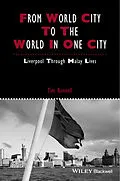
Tim Bunnell's book featured in the movie Pulang - the author has recently spoken in several interviews and programmes about how his fascination with the tales of Malay seamen in the UK led to writing this volume:
https://www.nst.com.my/lifestyle/groove/2018/07/387898/showbiz-sailing-sea-heartwarming-tales
http://www.thesundaily.my/news/2018/07/05/coming-home-last Coming home at last
https://www.youtube.com/watch?v=eiFWYHLz5ok
From World City to the World in One City examines changing geographies of Liverpool through and across the lives of Malay seamen who arrived in the city during its final years as a major imperial port.
- Draws upon life histories and memories of people who met at the Malay Club in Liverpool until its closure in 2007, to examine changing urban sites and landscapes as well as the city's historically shifting constitutive connections
- In considering the historical presence of Malay seamen in Liverpool, draws attention to a group which has previously received only passing mention in historical and geographical studies of both that city, and of multi-ethnic Britain more widely
- Demonstrates that Liverpool-based Malay men sustained social connections with Southeast Asia long before scholars began to use terms such as 'globalization' or 'transnationalism'
- Based on a diverse range of empirical data, including interviews with members of the Malay Club in Liverpool and interviews in Southeast Asia, as well as archival and secondary sources
- Accessibly-written for non-academic audiences interested in the history and urban social geography of Liverpool
Autorentext
Tim Bunnell is Associate Professor in the Department of Geography at the National University of Singapore. He is the author of Malaysia, Modernity and the Multimedia Super Corridor: A Critical Geography of Intelligent Landscapes (2004).
Klappentext
From World City to the World in One City examines changing geographies of Liverpool through and across the lives of Malay seamen who arrived in the city during its final years as a major imperial port.
Tim Bunnell demonstrates how local and transitional Malay social networks were anchored in specific sites in Liverpool for more than half a century. The life histories and memories of the people who met at two successive Malay Club sites, initially in the south docks and subsequently in the Liverpool 8 area of the city, provide a novel window into Liverpool's changing urban geography and long distance connections. Bunnell begins by tracing the seafaring lives and labour of young Malay men in the mid-twentieth century when the commercial reach of maritime world city Liverpool extended to the Malay World region. He then examines Liverpool's post-imperial commercial demise and the intertwined economic "rise" of parts of Southeast Asia that Malay seamen had left behind. Finally, the book considers recent culture-led economic development strategies in Liverpool - particularly its branding as the "world in one city" - and their implications for Malay ex-seamen, their families and Malaysian citizens.
From World City to the World in One City draws upon interviews and participant observation in Liverpool, Malaysia and Singapore, as well as a range of archival, documentary, literary and popular cultural sources.
Zusammenfassung
Tim Bunnell's book featured in the movie Pulang - the author has recently spoken in several interviews and programmes about how his fascination with the tales of Malay seamen in the UK led to writing this volume:
https://www.nst.com.my/lifestyle/groove/2018/07/387898/showbiz-sailing-sea-heartwarming-tales
http://www.thesundaily.my/news/2018/07/05/coming-home-last Coming home at last
https://www.youtube.com/watch?v=eiFWYHLz5ok
From World City to the World in One City examines changing geographies of Liverpool through and across the lives of Malay seamen who arrived in the city during its final years as a major imperial port.
- Draws upon life histories and memories of people who met at the Malay Club in Liverpool until its closure in 2007, to examine changing urban sites and landscapes as well as the city's historically shifting constitutive connections
- In considering the historical presence of Malay seamen in Liverpool, draws attention to a group which has previously received only passing mention in historical and geographical studies of both that city, and of multi-ethnic Britain more widely
- Demonstrates that Liverpool-based Malay men sustained social connections with Southeast Asia long before scholars began to use terms such as 'globalization' or 'transnationalism'
- Based on a diverse range of empirical data, including interviews with members of the Malay Club in Liverpool and interviews in Southeast Asia, as well as archival and secondary sources
- Accessibly-written for non-academic audiences interested in the history and urban social geography of Liverpool
Inhalt
Series Editors' Preface vii
List of Figures viii
Abbreviations and Acronyms ix
Glossary of NonEnglish Terms xi
Acknowledgements xiv
Prologue 1
1 Introduction: Locating Malay Liverpool 5
Worlds of Connection, Worlds in Cities 10
Sites and Routes of Fieldwork 14
Organization of the Book 20
2 From the Malay World to the Malay Atlantic 27
World City Liverpool in the Alam Melayu 28
Malays in the 'New York of Europe' and in New York 39
The Malay Atlantic 45
3 Home Port Liverpool and its Malay Places 56
Somewhere Worth Staying? 57
Remembering Cosmopolitanism and its Limits 62
Home and Away 68
Places to Be Malay 72
4 Merseyside Malaise and the Unmaking of British Malaya 83
Transnationalization and Malaysianization 84
Student Connections: From Kirkby to the Inner City 90
Urban Malaise 94
5 Diasporic (Re)connections 107
In Search of Lost Ancestors 108
Diaspora Envy and Worldly Malayness 114
Old Malays versus the Islamized New Malay 121
6 Relocating Expectations of Modernity 135
Kuala Lumpur: Journeys to the New Centre of the Malay World 136
Tandasization: Excremental Transition in Malacca 144
Returning to Singapore: From Third World to First 150
7 Community in the Capital of Culture 165
The Place of Community 166
Glasgowing and Beyond: Towards Multicultural Regeneration 172
Marking Malays(ia) on the Map of the World in One City 178
8 The Last Hurrah: From Independence Celebrations and Interculturalism to Club Closure 188
Merdeka on the Mersey 189
Performing Malayness on Jermyn Street 194
Community Conflict and Urban Interculturalism 198
Death in the Place of Community 202
9 Conclusion: Catching up with Kuala Lumpur? 211
Comparative, Conceptual and Methodological Returns 216
Key Lifepaths 227
Archival and Documentary Sources 231
References 233
Index 250