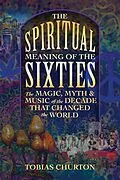
Unveils the spiritual meaning that fueled the artistic, political, and social revolutions of the 1960s
• Investigates the spiritual principles that informed everything from the civil rights and anti-war movements, to the hippies' rejection of materialist culture, to the rise of feminism, gay rights, and environmentalism
• Reveals how medieval troubadours, Gnosticism, Renaissance hermetic magic, and the occult doctrines of Aleister Crowley helped shape the psychedelic Sixties
• Offers in-depth analysis of many of the era's most famous books, films, and music
No decade in modern history has generated more controversy and divisiveness than the tumultuous 1960s. For some, the '60s were an era of free love, drugs, and social revolution. For others, the Sixties were an ungodly rejection of all that was good and holy. Embarking on a profound search for the spiritual meaning behind the massive social upheavals of the 1960s, Tobias Churton turns a kaleidoscopic lens on religious and esoteric history, industry, science, philosophy, art, and social revolution to identify the meaning behind all these diverse movements.
Engaging with views of mainstream historians, some of whom write off this pivotal decade as heralding an overall decline in moral values and respect for tradition, Churton examines the intricate network of spiritual forces at play in the era. He reveals spiritual principles that united the free love movement, the civil rights and anti-war movements, the hippies' rejection of materialist culture, and the eventual rise of feminism, gay rights, and environmentalism. He traces influences from medieval troubadours, Gnosticism, Hindu philosophy, Renaissance hermetic magic, and the occult doctrines of Aleister Crowley. He also examines the psychedelic revolution, the genesis of popular interest in UFOs, and the psychological consequences of the Bomb and the assassinations of the Kennedys and Martin Luther King. In addition, Churton investigates the huge shifts in consciousness reflected in the movies, music, art, and literature of the era--from Frank Sinatra to the Beatles, from I Love Lucy to Star Trek, from John Wayne to Midnight Cowboy--much of which still resonates with the youth of today.
Taking the reader on a long strange trip from crew-cuts and Bermuda shorts to Hair and Woodstock, from liquor to psychedelics, from uncool to cool, and from matter to Soul, Churton shows how the spiritual values of the Sixties are now reemerging, with an astonishing influx of spiritual light, to once again awaken us.
Autorentext
Tobias Churton is Britain's leading scholar of Western Esotericism, a world authority on Gnosticism, Hermeticism, and Rosicrucianism. He is a filmmaker and the founding editor of the magazine Freemasonry Today. An Honorary Fellow of Exeter University, where he is faculty lecturer in Rosicrucianism and Freemasonry, he holds a master's degree in Theology from Brasenose College, Oxford, and created the award-winning documentary series and accompanying book The Gnostics, as well as several other films on Christian doctrine, mysticism, and magical folklore. The author of many books, including Gnostic Philosophy, The Invisible History of the Rosicrucians, and Aleister Crowley: The Beast in Berlin, he lives in England.
Inhalt
Acknowledgments
PART ONE
ONE
The Sixties--PHEW!--and Me
TWO
Pro and Anti: The Myth of Progress
Change and Progress
Seeds of '60s Change
PART TWO
THREE
Defining Terms: What Does "Spiritual Meaning" Mean?
Spirit--What Does It Mean?
How to Discern Spiritual Things
FOUR
As Above, So Below: Models of Spiritual Meaning in History
Louis Claude de Saint-Martin (1743-1803)
Antoine Fabre d'Olivet (1767-1825)
PART THREE
FIVE
Watertown
SIX
1960: Dawn of the Era
SEVEN
Plastic Fantastic
The Great Plastic, Push-Button, Robotic Space Race
"We're all going on a summer holiday . . ."
EIGHT
Psychology
NINE
Apocalypse Then
Ban the Bomb
Postscript . . . Far Out and Outta Sight
TEN
Education: Loosening the Bonds
Dr. Spock
Game-Change at School
Education in the Movies
ELEVEN
Discomfiting Changes in Theology
We're More Popular than Jesus Now
John "Hoppy" Hopkins and the London Free School
Dame Frances Yates and the Hermetic Tradition
TWELVE
The Persistence of the Bible
The Bible in Popular Culture
Repression in Russia
From Pilgrimages to Jesus Christ Superstar
THIRTEEN
Civil Rights
James Baldwin
A Few Generally Accepted Facts in Chronological Sequence
PART FOUR
FOURTEEN
The Party's Over
FIFTEEN
The Spiritual in Art in the Sixties: The Age of Space
The Artists
The Real Icon
Yves Klein (1928-1962)--Prophet
SIXTEEN
The Spiritual in Orchestral, Film, and Jazz Music
SEVENTEEN
What the World Needs Now Is Love: The Spirit in Pop Music
EIGHTEEN
Cinema
Cinema as It Was--in Just One Day
Spiritual Values in Sixties Cinema
NINETEEN
Television
Spiritual Television?
A Day of TV in 1968
PART FIVE
TWENTY
Woman Freeing Helen "Birds"
TWENTY-ONE
Sexual Revolution
Flower Power
Pornography
Homosexuality
TWENTY-TWO
Psychedelics
Hashish
LSD-25
Hip Gnosis
TWENTY-THREE
India
Vedanta and Advaita
Maharishi Mahesh Yogi (ca.1918-2008)
Ravi Shankar (1920-2012)
Swami Bhaktivedanta (1896-1977)
TWENTY-FOUR
Shiva: The Destroyer, the Uniter, the Transformer
PART SIX
TWENTY-FIVE
The Turning Point--1965: The Aeon of the Child Made Manifest
TWENTY-SIX
Feeling Groovy: The West Coast
The Human Be-In and Gathering of the Tribes
The Levitation of the Pentagon
TWENTY-SEVEN
The Beast and the Six Six Sixties
The Beast in Sixties America
Wasserman's Quest
PART SEVEN
TWENTY-EIGHT
New York
New York's Art and Literature Scene
Axis Bold as Love
TWENTY-NINE
1969 I: No Peace for the Wicked
The Amsterdam Bed-In
THIRTY
1969 II: So Near and Yet So Far, or . . . What the Hell Went Wrong? Not So Easy Rider
And Suddenly, It Was the Seventies
THIRTY-ONE
The Spiritual Meaning of the 1960s
We Blew It
Easy Rider
Notes
Bibliography
Index