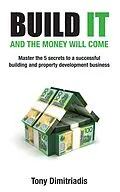
You are an ambitious business owner who wants to make a mark on the world. You want to achieve your personal goals, whatever they may be. In business, you want to achieve financial stability and take control over your business and your life. You want to live a lifestyle that enables you to have more money in your pocket and more time to use it, in any way you choose. But how do you do it? Business is tougher than ever in today's competitive world with more than 60 per cent of small businesses failing within the first three years, and 75 per cent failing within five years, according to the Australian Bureau of Statistics. As a result, you need to be as strong as the concrete slab you lay when building. Just like when you're constructing a building, your business needs to have a strong foundation. You need to have the right people working for you and with you to build your business and your lifestyle. In this book I will teach you how you can better financially manage your business so that you have more money in your pocket to fund the lifestyle you want. You can achieve this by following five simple steps, each outlined in the book's chapters: 1.Strategy: The first step in any journey is deciding where you want to go. In the first step of my framework, you'll create a strategic plan by assessing where you are now, deciding where you want to go, and charting the most efficient course between the two. 2.Structure: The right structure can save time, money and heartache. The wrong structure, on the other hand, can make your business far more expensive and complicated than it needs to be. Structure is an essential piece of achieving your strategic goals, so in this step I'll outline what you need to consider when it comes to choosing the right structure for you. 3.Statutory: Are you aware (and on top of) all of the obligations you have to the Australian Taxation Office (ATO), Australian Securities and Investment Commission (ASIC), State Revenue Office (SRO), Land Titles Office, WorkCover Authority, your superannuation provider and your bank? This is a major stumbling block where businesses in building and property development can unwittingly subject themselves to fines and liability. In Chapter 3, I'll cover the main obligations you need to be aware of as an ambitious business owner. 4.Systems: If you are trying to manage everything by yourself on an ad hoc basis, not only is this inefficient, but you run the risk of not meeting your statutory obligations. In this step I'll share the main money management systems your business will need to stay on top of your obligations, while moving towards your strategic goals. 5.Support: As an ambitious business owner, you probably try to do it all. After all, it's your business - you want to make sure everything's running as it should be. The problem is that this isn't sustainable - you can't be all things to all people, and you can't do everything at the high standards you'd like. This is why support is essential. In Chapter 5 I'll teach you how to find the right support team to help you implement the first four steps of the framework, while pushing your business on to bigger and better things. In these five steps, you will find all the tools you need to grow a financially rewarding, tax-efficient, lifestyle business.
Autorentext
TONY DIMITRIADIS is a Certified Practising Accountant (CPA) and has successfully run his tax and accounting firm, AD Partners, for more than two decades. He has published a range of articles offering simple and practical tax and business advice online at www.adpartners.com.au.
Inhalt
Introduction
- Build it and the money will come
- Who am I?
- Keep it simple, stupid
Chapter 1: Strategy
- Where are you going?
- Defining your mission statement
- Creating a vision statement
- Defining your values
- Setting your one- to three-year goals
- Where are you now?
- Profit and loss statement
- Balance sheet
- Statement of cash flow
- Putting it all together
- How will you get there?
- Business benchmarks
- Key performance indicators
- Taking action
- Measuring your progress
Chapter 2: Structure
- What are the options?
- What should you be thinking about?
- Asset protection
- Tax minimisation
- Control
- Active or passive income
- Cost
- Ease of administration
- Ability to adapt
- Succession planning
Chapter 3: Statutory
- Compliance requirements
- Tax
- Superannuation
- Workers' compensation
- Payroll tax
- Land tax
- Stamp duty
Chapter 4: Systems
- Managing cash flow
- Creating a cash flow forecast
- Maximising your working capital
- Managing payments to suppliers
- Managing work in progress
- Managing debtors
- Managing finance
- Getting the most out of debt finance
- Refinancing
- Troubleshooting
Chapter 5: Support 79
- Working with a virtual CFO versus doing it yourself
- What are the different ways a virtual CFO can help you and your business?
- How do you choose a virtual CFO?
Conclusion
Appendices
- Appendix A: Taxation issues for property developments
- Appendix B: Structuring your property development
- Appendix C: Property development and GST
- Appendix D: The Small Business Restructure Rollover