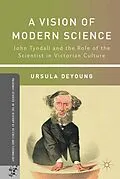
An examination of a pivotal moment in the history of science through the career and cultural impact of the historically neglected Victorian physicist John Tyndall, establishing him as an important figure of the period, whose scientific discoveries and philosophy of science in society are still relevant today.
Autorentext
Paul N. Bloom (Duke University) Edward Skloot (Duke University) Brett Smith (Miami University Funda Sezgi (IESE) Johanna Mair (IESE) Srikant M. Datar (Harvard University) Marc J. Epstein (Rice University) Kristi Yuthas (Portland State University) Debra E. Meyerson (Stanford University) Alexander Berger (Stanford University) Rand Quinn (Stanford University) John Elkington (Volans) Pamela Hartigan (Oxford University) Alejandro Litovsky (Volans) Jon Huggett (University of New South Wales) Scott L. Newbert (Villanova University) Ronald Paul Hill (Villanova University) Imran Chowdhury (ESSEC) Filipe Santos (INSEAD) Lauren Trabold (Baruch College) Paul Bloom (Duke University) Lauren Block (Baruch College) Minette E. Drumwright (University of Texas) Mercedes Duchicela (University of Texas) David T. Robinson (Duke University) Cornelia Pechmann (University of California, Irvine) J. Craig Andrews (Marquette University)
Inhalt
Tyndall's Work as a Scientist: Practice and Reception Tyndall's Philosophy of Science and Nature: The Influences of Carlyle, Emerson, Goethe and Faraday Tyndall and Theology: The Definition and Boundaries of Science Tyndall as Reformer: The Place of Science in Education Science After Tyndall: The Growth of University Laboratories Conclusion: Scientists in British Culture, 1870-1900
Titel
A Vision of Modern Science
Untertitel
John Tyndall and the Role of the Scientist in Victorian Culture
Autor
EAN
9780230118058
Format
E-Book (pdf)
Hersteller
Digitaler Kopierschutz
Wasserzeichen
Dateigrösse
2.42 MB
Anzahl Seiten
270
Unerwartete Verzögerung
Ups, ein Fehler ist aufgetreten. Bitte versuchen Sie es später noch einmal.