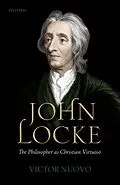
Early modern Europe was the birthplace of the modern secular outlook. During the seventeenth century nature and human society came to be regarded in purely naturalistic, empirical ways, and religion was made an object of critical historical study. John Locke was a central figure in all these events. This study of his philosophical thought shows that these changes did not happen smoothly or without many conflicts of belief: Locke, in the role of Christian Virtuoso, endeavoured to resolve them. He was an experimental natural philosopher, a proponent of the so-called 'new philosophy', a variety of atomism that emerged in early modern Europe. But he was also a practising Christian, and he professed confidence that the two vocations were not only compatible, but mutually sustaining. He aspired, without compromising his empirical stance, to unite the two vocations in a single philosophical endeavour with the aim of producing a system of Christian philosophy.
Autorentext
Victor Nuovo is Charles A. Dana Professor of Philosophy Emeritus at Middlebury College, Vermont, and Senior Research Fellow at Harris Manchester College, Oxford. He taught at Middlebury College from 1962 to 1994. He is the editor John Locke: Writings on Religion (2002) and of the Clarendon Edition of Locke's Vindications of the Reasonableness of Christianity (2012), both published by OUP.