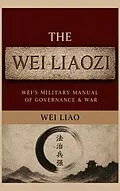
The Wei Liaozi is one of the most uncompromising works to emerge from China's Warring States period?a severe and unsentimental manual on how a state must be governed if it is to survive war.
Unlike battlefield-focused texts that emphasize tactics or deception, the Wei Liaozi addresses a more fundamental problem: how political order, law, discipline, and social organization determine military success long before armies ever meet. It argues that victory is not produced by clever generals alone, but by governance capable of imposing order, enforcing authority, and eliminating internal weakness.
This work belongs to the Legalist?military tradition. It treats law as an instrument of control rather than moral instruction, views reward and punishment as the primary drivers of human behavior, and regards softness, indulgence, and inconsistency as precursors to collapse. In the Wei Liaozi, war is not an aberration but a test?an audit that exposes the true condition of a state's institutions, discipline, and leadership.
This modern interpretation reorganizes the text's doctrines into a clear, coherent structure, guiding the reader through its core principles:
? Governance as the root of military power
? Law and authority as foundations of order
? Reward and punishment as mechanisms of control
? The militarization of civil society
? Discipline, readiness, and command reliability
? War as the ultimate measure of governance
? Corruption, decay, and the logic of collapse
The result is not a romanticized philosophy of war, but a hard blueprint for state survival under pressure. The Wei Liaozi does not ask whether its methods are pleasant. It asks whether they work.
The Wei Liaozi
Wei's Military Manual of Governance & War is essential reading for those interested in ancient strategy, political power, Legalist thought, and the foundations of authority that precede victory?or defeat.