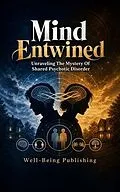
Mind Entwined offers a clear, accessible introduction to Shared Psychotic Disorder, also known as folie à deux, for readers who want to understand a rare but clinically significant mental health condition that can be both subtle in onset and profound in its impact. The book is written with a broad audience in mind, including mental health professionals seeking a concise refresher, students building foundational psychiatric knowledge, caregivers supporting affected individuals, and concerned readers trying to make sense of confusing or distressing relational dynamics. It situates the disorder within real-world contexts, helping readers see how it can emerge not as an isolated symptom, but as a relational phenomenon shaped by proximity, emotional dependence, and environmental stressors.
The book explains in detail how shared delusions can develop within close interpersonal relationships, particularly when one individual holds a dominant delusional belief system that is gradually adopted by a more suggestible or dependent partner. It outlines why the disorder is often missed in clinical and community settings, frequently being mistaken for primary psychotic disorders, personality-related issues, or even non-pathological strong belief systems. Special attention is given to the gradual and often imperceptible progression of symptoms, which can make early recognition difficult even for trained observers. Readers are guided through the subtle warning signs to watch for, such as increasing social withdrawal, reinforced mutual certainty in implausible beliefs, reduced external reality testing, and the narrowing of supportive relationships that might otherwise provide corrective feedback.
Drawing on established psychological concepts, illustrative case studies, and synthesised expert insight, Mind Entwined explores the complex interplay of attachment styles, emotional dependency, social isolation, suggestibility, and interpersonal power dynamics that contribute to the formation and maintenance of shared belief systems. It examines how intense relational bonds-particularly those marked by fear of abandonment, caregiving asymmetry, or enmeshment-can create conditions in which one person's distorted perceptions become internally validated and mutually reinforced. The text also considers the role of external stressors, such as bereavement, chronic stress, or isolation from broader social networks, in weakening reality-testing mechanisms and increasing vulnerability to shared delusional frameworks.
Readers will gain a structured, practical framework for recognizing changes in reality testing, judgment, and everyday functioning, including shifts in communication patterns, decision-making capacity, and responsiveness to contradictory evidence. The book also highlights how these changes may appear in both overt behaviors and more subtle relational cues, such as increased emotional fusion, resistance to outside perspectives, or escalating distrust of external sources of information. Importantly, it provides guidance on how to respond with care, clarity, and appropriate boundaries, emphasizing the importance of non-confrontational engagement, professional assessment, and safeguarding both individuals involved in the shared belief system.
Whether the reader is seeking a stronger clinical foundation in psychopathology or a plain-language overview of a complex and often misunderstood topic, Mind Entwined is designed to educate, empower, and support informed action. It bridges the gap between academic understanding and practical awareness, enabling readers to better identify, contextualize, and respond to shared psychotic presentations. In doing so, it encourages a more compassionate and informed approach to a condition that sits at the intersection of individual psychology and relational influence, ultimately fostering greater clarity in situations where reality itself may feel uncertain or contested.