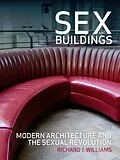
Massive modern skyscrapers, obelisks, towers-all are structures that, thanks to their phallic shape, are often associated with sex. But other buildings are more subtly connected, as they provide the frameworks for our sexual lives and act as reminders of our sexual memories. This relationship between sex and buildings mattered more than ever in the United States and Europe during the turbulent twentieth century, when a culture of unprecedented sexual frankness and tolerance emerged and came to dominate many aspects of public life. Part architectural history, part cultural history, and part travelogue, Sex and Buildings explores how progressive sexual attitudes manifest themselves in architecture, asking what progressive sexuality might look like architecturally and exploring the successes and failures of buildings' attempts to reflect it. In search of structures that reflect the sexual mores of their inhabitants, Richard J. Williams visits modernist buildings in Southern California, the Westin Bonaventure Hotel, the Playboy Mansion in Chicago, the Seagram in New York, communes from the 1960s, and more. A fascinating and often funny look at a period of extraordinary social change coupled with aesthetic invention, Sex and Buildings will change the way we look at the buildings around us.
Zusammenfassung
How, over the last century, have changing ideas of the body and sexuality influenced the design of buildings? And how, in turn, can certain structures influence the bodies within them? We invariably think of towers as phallic, but there are countless other ways buildings connote sex. The built environment provides the framework for our sexual lives; places and structures can act as reminders of our sexual histories; interior design can both embody and trigger erotic fantasies. Since Freud, Western societies have given sex an unprecedented centrality in public and private lives. The relationship between sex and buildings matters now more than ever. Part architectural history, part cultural analysis and part travelogue, Sex and Buildings explores how sexual attitudes appear in architecture. It asks what a sexually progressive architecture might look like – and how we understand some architectures as repressive. In search of the revolutionary, the enlightened and the buttoned-up, this book tours California’s modernist houses, the Playboy Mansion, Brazilian love hotels, 1960s communes and the architecture of Mad Men. Their relationship to evolving attitudes towards the family, women and homosexuality is assessed along the way, as well as the sexual theories of Sigmund Freud, Wilhelm Reich, Betty Friedan, Michel Foucault, Esther Perel and many others.A thought-provoking and highly readable look at a period of extraordinary social change coupled with aesthetic invention, Sex and Buildings offers a unique perspective on the buildings that surround us.To hear the Times Higher Education book podcast with Richard J. Williams please click here.