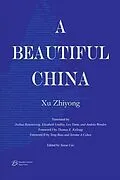
Xu Zhiyong is one of the top activists in China, but he is strangely not well known outside his home country. This book of essays should contribute to changing that, giving English-language readers a deep sense of Xu's life story, his political convictions, and his fundamental belief that Chinese citizens themselves can successfully push for democracy and the rule of law, even against a Chinese Communist Party (CCP) that seems ever more dead set against those goals.
A Beautiful China is not a memoir. Instead, it is a book of essays, many of them composed under unusual circumstances. Two of them, "Whither China?" and "For Freedom, Justice, and Love," were composed behind bars, and are all the more remarkable for their depth and incisiveness, given the circumstances of their creation. Nonetheless, these essays do give us a sense of Xu's life story, and his many contributions to human rights and civic participation in China.
The publication of this book should cement Xu's status, not just as a brave and tireless activist, but also as an incisive analyst of China's current political and economic woes. In essay after essay, Xu spells out the problems that China faces, and shows how they often spring from structural shortcomings in Chinese governance. In this volume's title essay, "A Beautiful China," Xu shows how key problems like corruption, economic inequality, and a tattered social safety net all stem from the Party's monopoly on power: politics and governance are shaped by the overwhelming need for the Party to maintain control, and all other concerns - including the provision of the most basic social goods like housing and health care - are subservient to that primary goal.
These essays also make clear that Xu is a relentless innovator: in chapter after chapter, Xu writes about his development of new tools to push for legal and political change. As a trained lawyer, Xu tried to create new legal avenues for the redress of wrongs. But he also sought to build new non-governmental organizations that could serve as key platforms for his activism. When those organizations became too sensitive, he sought to build new social movements that could press for bottom-up reforms, while evading state repression. Though the organizations and movements he founded were all eventually closed down, nonetheless they serve as key models that will be taken up by other activists, most likely after Party Secretary Xi Jinping departs from the political stage.
Xu became a national figure at the relatively tender age of 30, during the nationwide debate over the 2003 Sun Zhigang tragedy. But he had been preparing for that moment, and for his subsequent activist career, for years before that. Born in March 1973 in the aptly-named Minquan (Civil Rights) County in Henan province, Xu's early years coincided with the end of the Mao era, and with the launching of market reforms that would eventually transform the country. Xu remembers the hardscrabble nature of life in the countryside during that time, which he describes as "far from idyllic."(28) He also notes the embedded hierarchies of the time, such as the son of the village secretary riding on the shoulders of other children, whipping them while others laughed. Moments like these no doubt shaped his political consciousness, nudging him toward his life's calling.