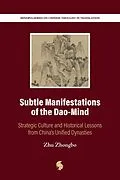
As China moves closer to the center of world politics, understanding the historical and cultural foundations of its strategic behavior has become increasingly important. Subtle Manifestations of the Dao-Mind examines the long-term intellectual and historical roots of Chinese grand strategy through a study of five unified dynasties-Qin, Western Han, Eastern Han, Sui, and Tang-during their periods of rise and consolidation.
Based on historical records and classical texts, the study adopts a three-step analytical approach, moving from patterns of strategic behavior to decision-makers' strategic orientations, and finally to the cultural origins of grand strategy. The analysis reveals that China's traditional strategic culture exerted a substantive normative influence on strategic behavior. While instances of divergence between strategic rhetoric and practice did occur, cultural principles-especially those associated with the Way of the sage-kings-played an enduring role in guiding, constraining, and evaluating political action. Through historical experience and retrospective critique, they contributed to the formation of long-term norms emphasizing restraint, moral legitimacy, and the limitations of coercive power.
By integrating historical analysis with conceptual reflection, Subtle Manifestations of the Dao-Mind offers a historically grounded analytical account of Chinese strategic culture and contributes to broader debates on grand strategy, international relations theory, and the role of ideas in shaping state behavior.